Staghorn Sumac
Rhus typhina · also: sumac vinaigrier, velvet sumac
ripe nowHerbs & tea🗓 Red cones ripe August, hold into winter📍 31 on map (1 confirmed)
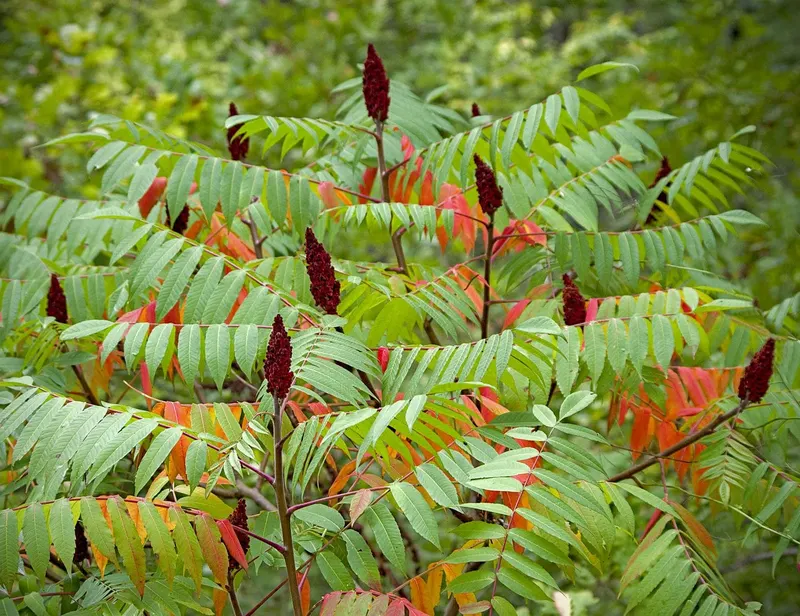
How to ID it
- Big fuzzy upright cones of deep-red berries at branch tips.
- Compound leaves with many toothed leaflets in a row; young twigs velvety like antler 'velvet' (hence staghorn).
- Forms colonies on roadsides, embankments, and waste ground; brilliant red-orange leaves in fall.
⚠ Safety & lookalikes
- Eat only red, upright, fuzzy cones. Its dangerous twin, poison sumac, is clearly different once you know it: white-to-green berries that droop, growing only in wet, swampy ground. Red + upright + dry ground = the edible one.
- Despite the name, edible sumac has nothing to do with poison-ivy toxicity — it's the same genus as the Middle-Eastern spice.
The tart red spice-and-lemonade plant, ripening in August. Flag the colonies now (they’re easy to spot) and come back when the cones deepen to firm red.
Harvest
- Pick whole cones on a dry day (rain washes out the tart coating that gives the flavour). Ripe cones are deep red and firm.
- Taste-test: lick a cone — it should be distinctly sour/tart. Bland means under-ripe or rain-washed.
Prep
- Sumac-ade: crush a few cones, soak in cold water 15–30 min (hot water pulls out bitter tannins), swish, strain through cloth, sweeten. A pink, tart, lemonade-like drink.
- Spice: dry the berries, rub off and grind the outer red flesh from the seeds — that red powder is the tangy za’atar sumac. Great on flatbread, fish, salads.
Notes
(Mark the colonies now; check ripeness through August.)
Guides & links
Updated 2026-07-27