Rowan / Mountain-Ash
Sorbus aucuparia · also: rowan, european mountain-ash, sorbier, cormier
ripe nowFruit & berries🗓 Berries colour up Aug–Sep; best after first frost, hold on the tree into winter📍 33 on map (2 confirmed)
How to ID it
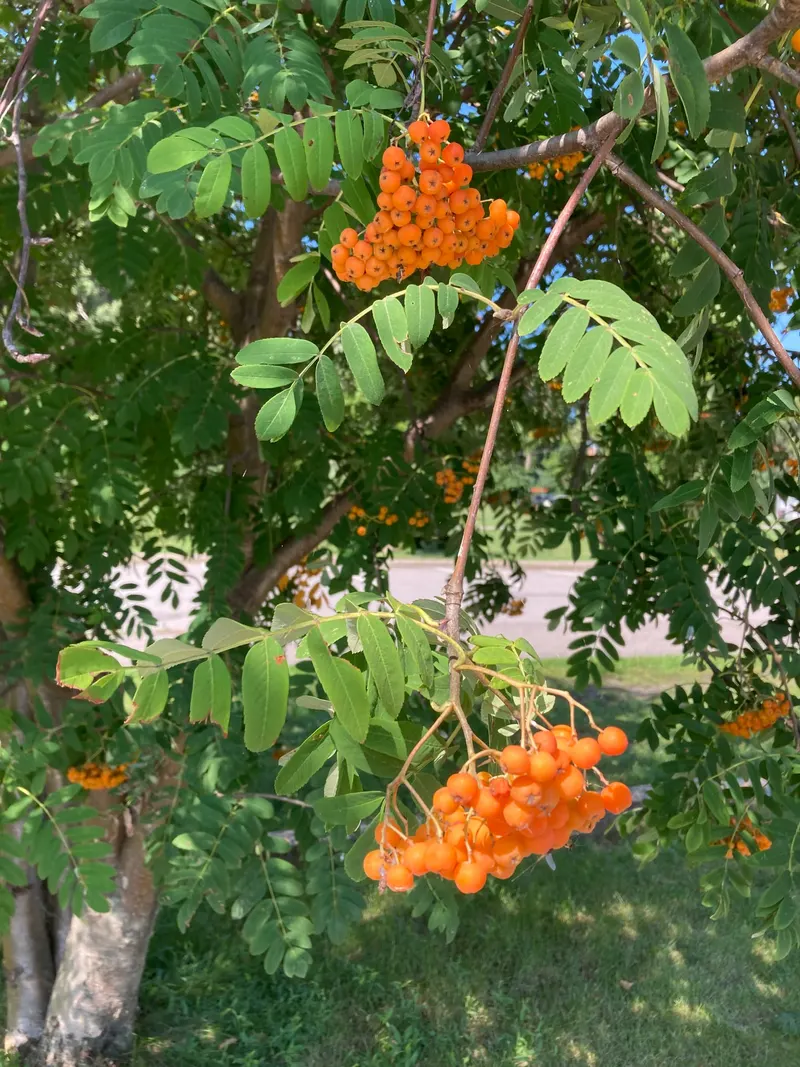
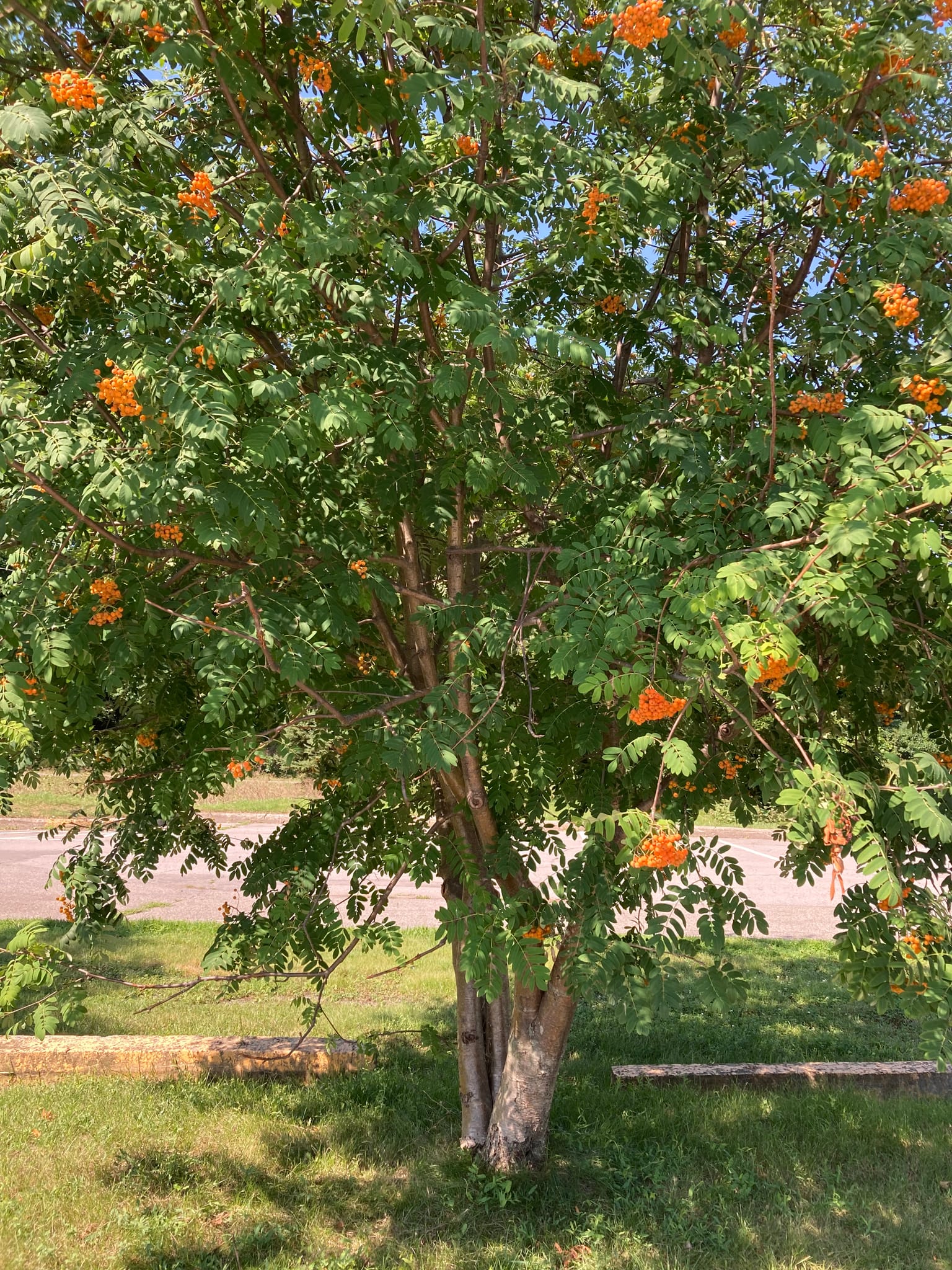
- Small-to-medium tree; smooth greyish bark, often multi-stemmed.
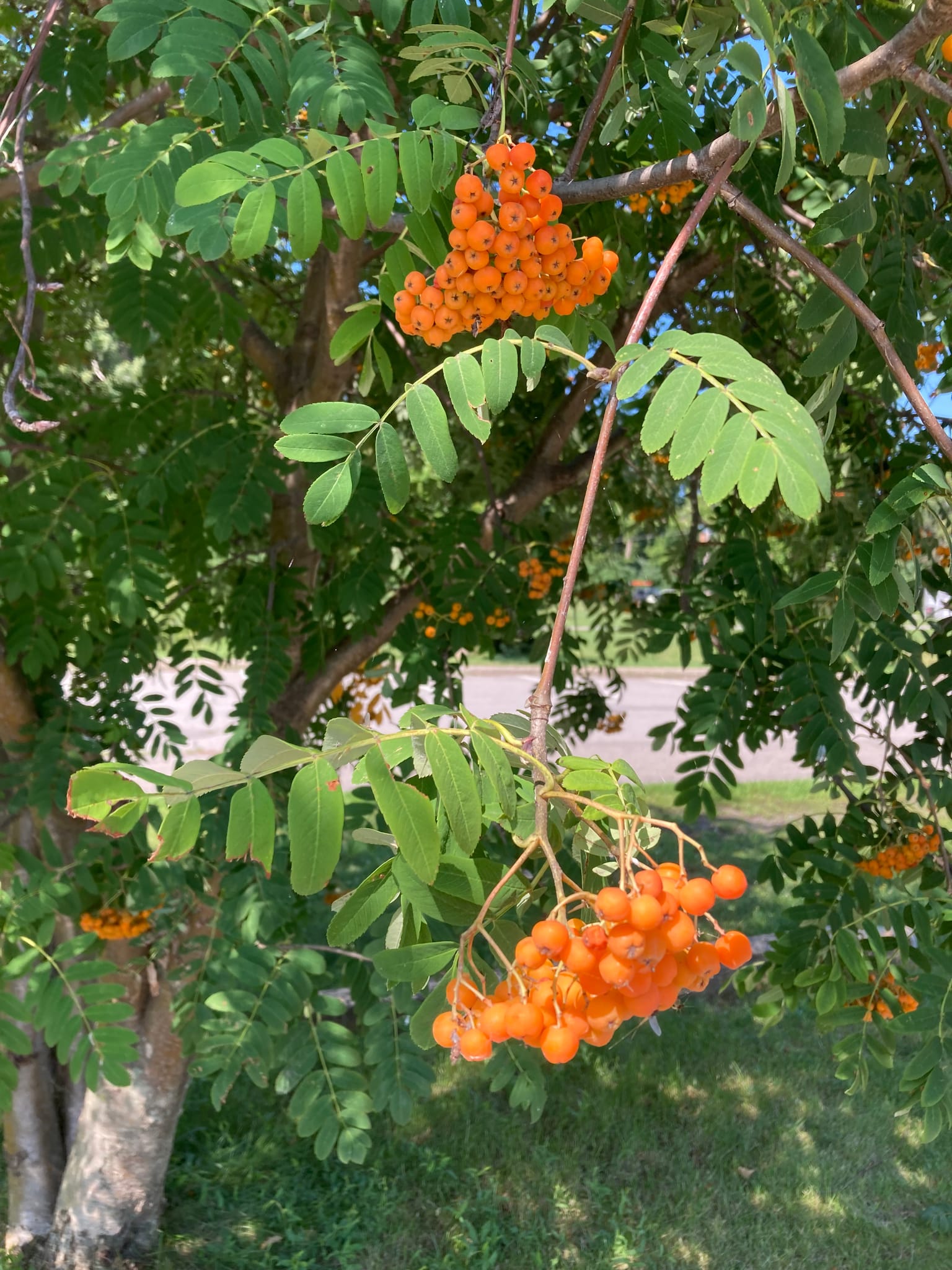
- Pinnate compound leaves — a central stalk lined with ~11–17 paired, finely serrated leaflets.
- Dense, flat-topped clusters of small (~8 mm) orange-red berries (pomes), each with a tiny 5-pointed star at the tip.
- Very common as a park and street tree across Montréal.
Safety
- Not for raw eating in quantity — intensely bitter, and raw berries contain parasorbic acid that can irritate the stomach.
- Cooking turns the parasorbic acid into harmless sorbic acid, and a frost (or a night in the freezer) mellows the bitterness — cooked rowan is safe and traditional.
- ID by pinnate leaves + flat clusters of orange pomes; don't confuse with unrelated ornamental berries you can't vouch for.
Rowan is a classic hedgerow and street tree — the orange berry clusters are unmistakable in late summer. Edible, but firmly in the cook-don’t-graze camp: raw they’re harshly bitter and a little irritating, but cooked (ideally after a frost) they make one of the great wild preserves.
Harvest
- Cut whole clusters once the berries are fully orange-red and slightly soft, August into fall. They hold on the tree for months, so there’s no rush.
- Best flavour comes after the first frost — or cheat it by freezing the picked berries overnight, which breaks down the bitterness the same way.
- Strip the berries off the stalks before cooking (the stalks are bitter).
Prep
- Rowan jelly is the classic: a tart, faintly bitter amber preserve, traditionally served with game, lamb, and rich cheeses. Rowan is high in pectin, so it sets well — or blend with crabapple for extra set and a softer flavour.
- Also good cooked into a sharp sauce or added to apple dishes for a bittersweet edge.
- High in vitamin C.
Notes
- Never eat more than a nibble raw — bitter and stomach-upsetting.
- (Log the first-frost date each year — that’s your cue that the berries have sweetened.)
Updated 2026-08-04