Rose Hips
Rosa sp. · also: rose hips, wild rose, églantier, cynorrhodon
ripe nowFruit & berries🗓 Hips colour up Sep; best after the first frosts, hold into winter📍 2 on map
How to ID it
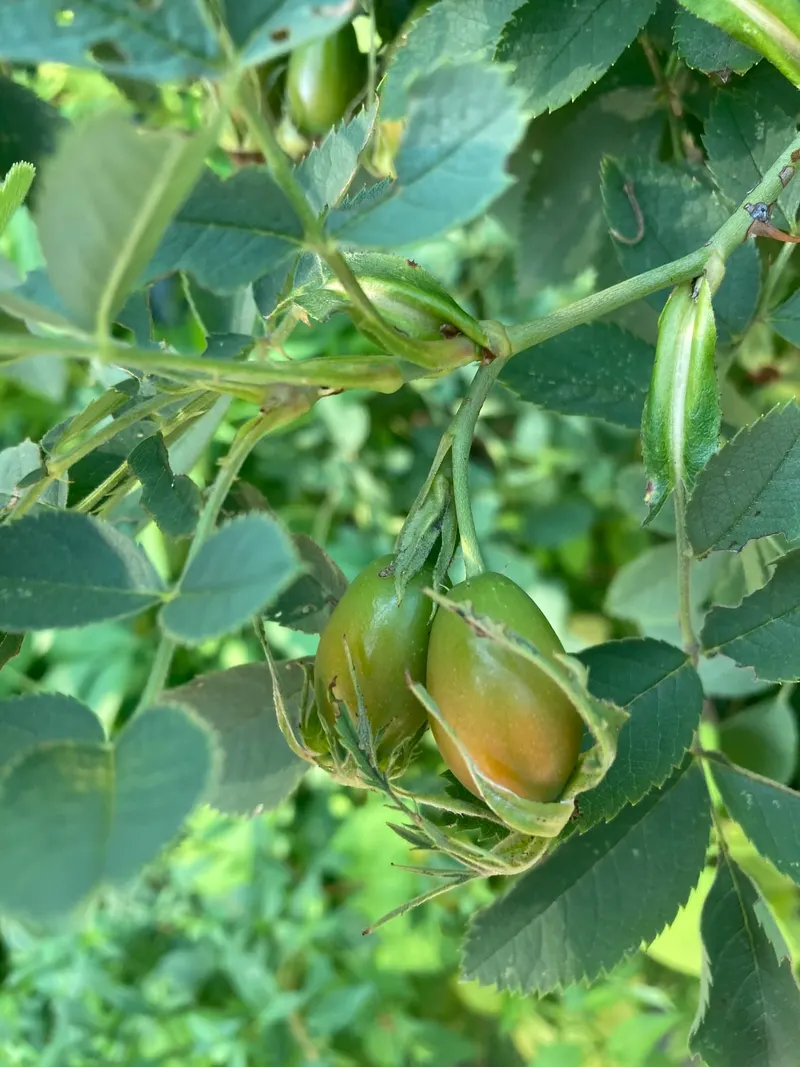
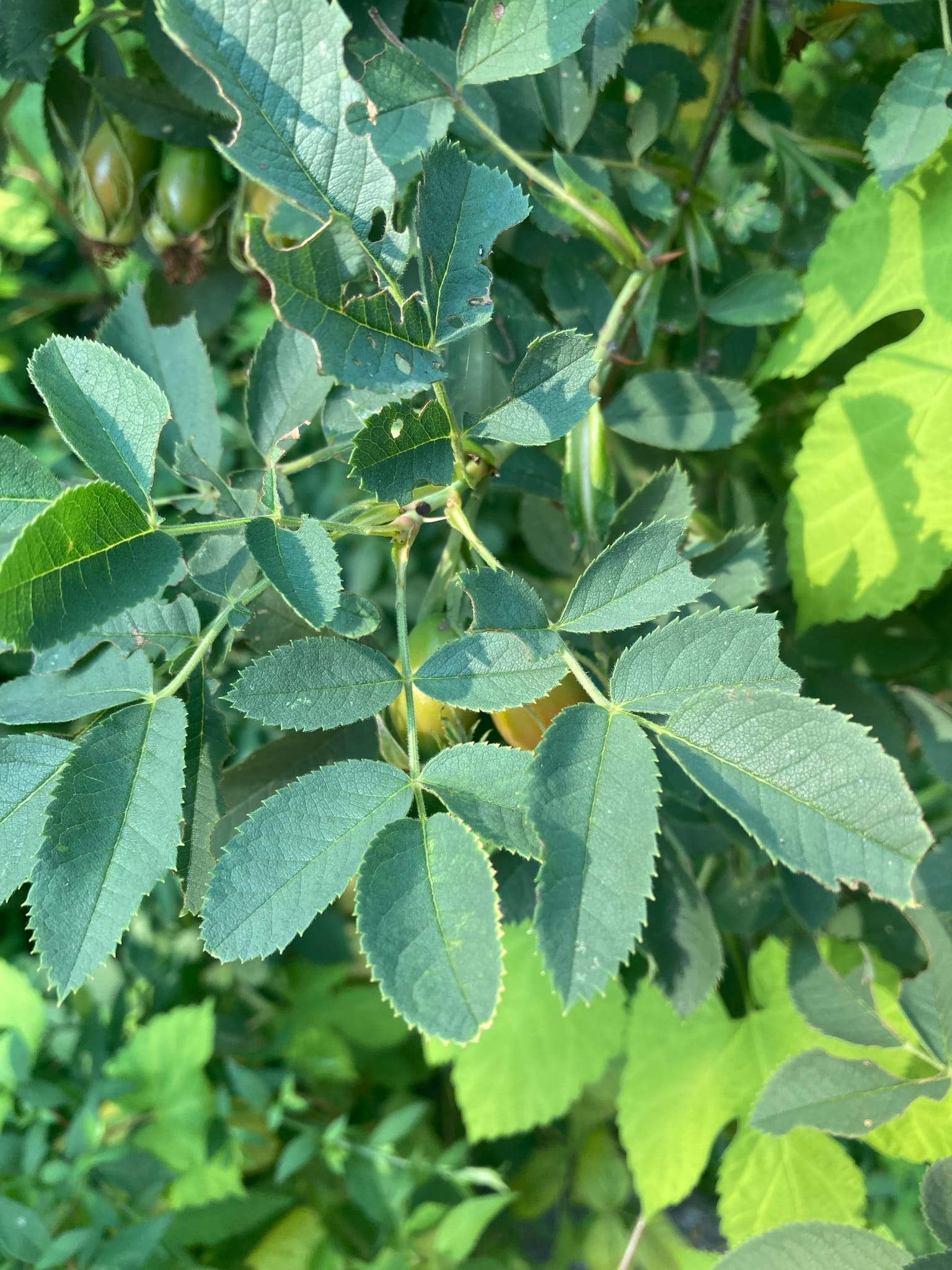
- Thorny arching shrub; leaves pinnate with 5–7 (sometimes 9) toothed leaflets on a stalk — like a small rowan leaf but prickly.
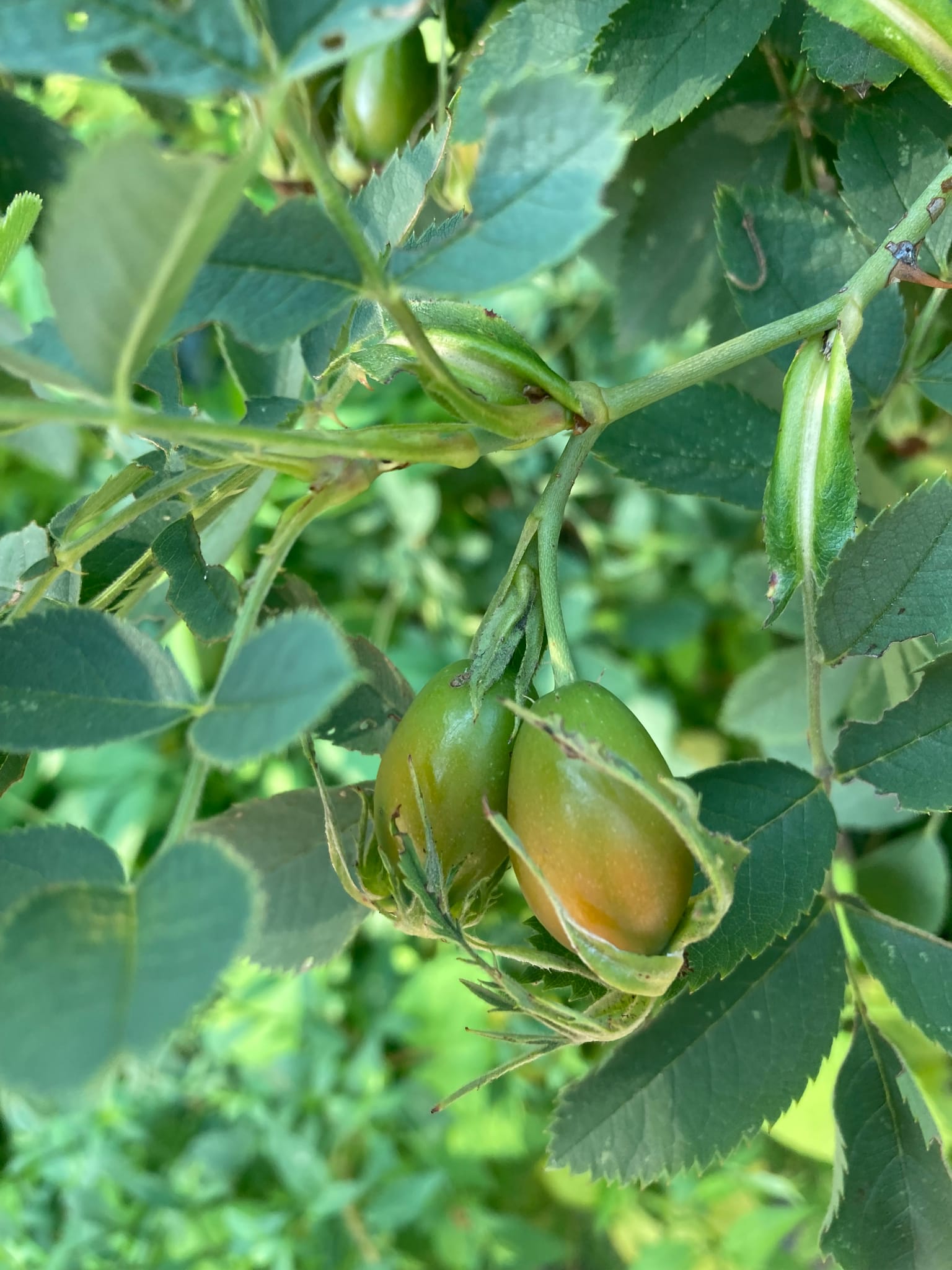
- The 'hip' is the swollen fruit left behind after the flower drops: an oval-to-round pod that ripens from green → orange → deep red.
- Look for the dried sepal 'crown' at the tip of each hip and the remains of the rose flower.
Safety
- All true rose (Rosa) hips are edible — no toxic rose lookalikes, and one of the easiest wild fruits to ID (a thorny, pinnate-leaved shrub with red flower-pods).
- Scrape out the seeds and inner hairs before eating the flesh: the fine hairs around the seeds are an irritant (the original "itching powder"). Either scrape the flesh off, or cook whole and strain.
What a rose hip is: the fruit of a rose. Once the flower’s petals fall, the base swells into a little red pod — that’s the hip. It’s a “berry” only loosely; botanically it’s a fleshy pod packed with seeds. The thin outer flesh is the edible part, and it’s one of the richest wild sources of vitamin C there is (famously used for syrup during WWII when citrus was scarce).
Harvest
- Hips ripen from green through orange to deep red over September; leave green ones and come back once they’ve coloured up.
- Best picked after the first frost, when they soften and sweeten (or pick firm and freeze overnight to fake the frost). They hang on the shrub well into winter, so there’s a long window.
- Bigger hips (dog rose, rugosa) are much less fiddly than tiny ones.
Prep — mind the seeds
The catch: inside each hip is a cluster of seeds wrapped in fine irritant hairs you don’t want to swallow. Two ways around it:
- Whole-cook-and-strain: simmer whole hips soft, then push through a sieve or jelly bag — the smooth pulp/juice comes through, hairs and seeds stay behind. This is the easy route for syrup, jelly, or purée.
- Deseed fresh: top-and-tail, halve, scrape out the seeds and hairs, use the shells for tea or drying.
Uses
- Rose-hip syrup — the classic, spooned over yogurt/desserts or in drinks; a vitamin-C tonic.
- Tea — dried deseeded shells, tart and floral (often blended with hibiscus).
- Jelly/jam — tart, high pectin.
Notes
- (Verdun shrub logged Aug 4 — green now; come back after first frost.)
Guides & links
Updated 2026-08-04