Red Raspberry
Rubus idaeus · also: wild red raspberry, framboise sauvage
Fruit & berries🗓 Ripe July–Aug (often a lighter second flush into fall)📍 10 on map (2 confirmed)
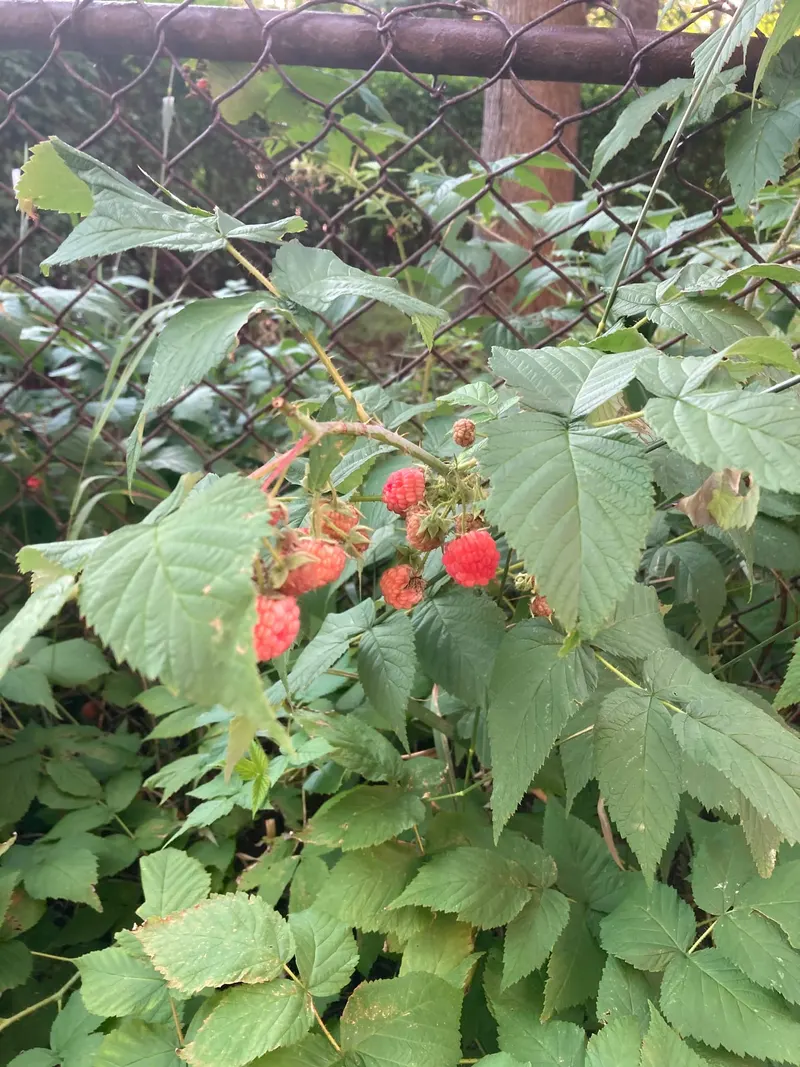
How to ID it
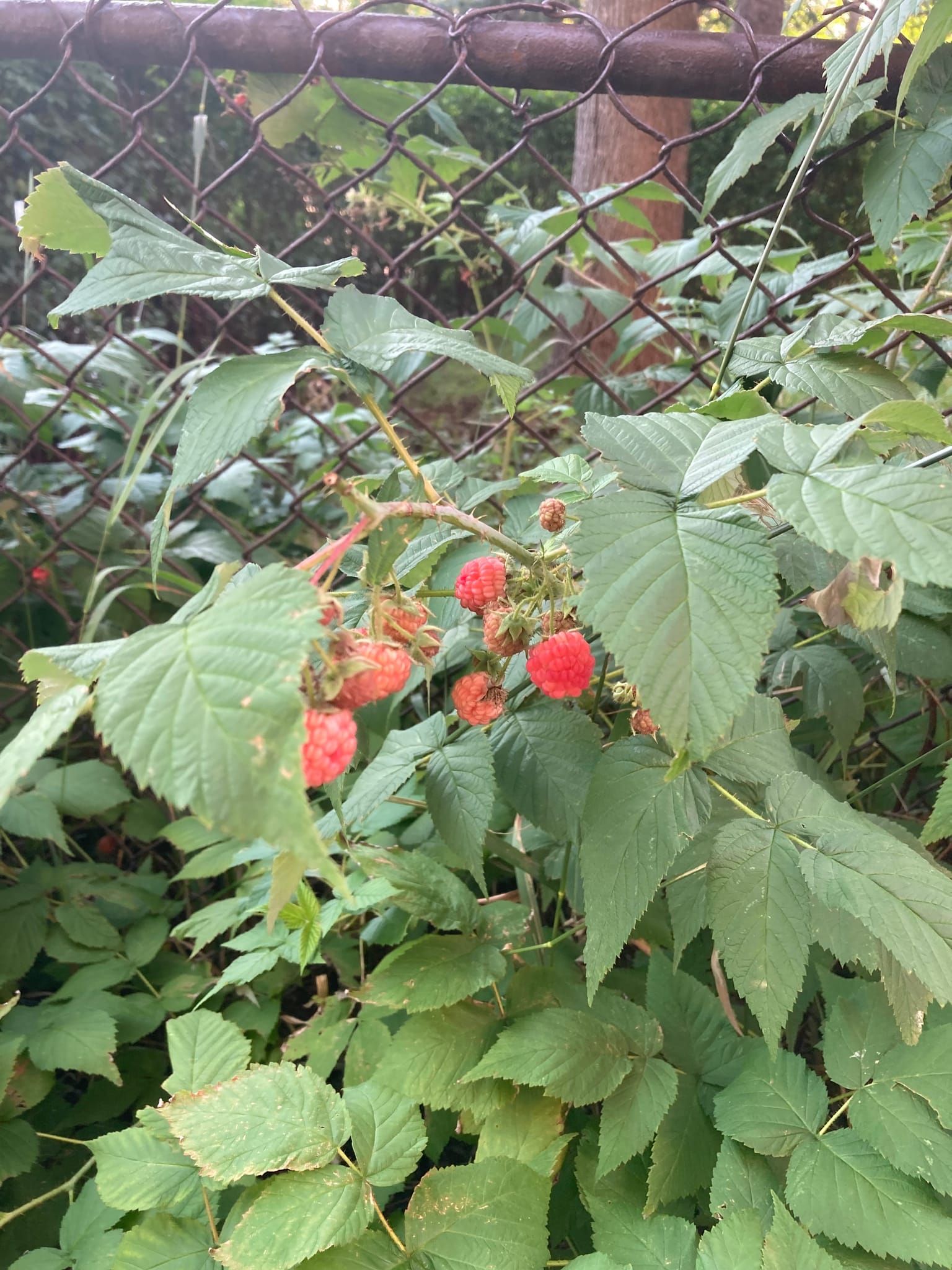
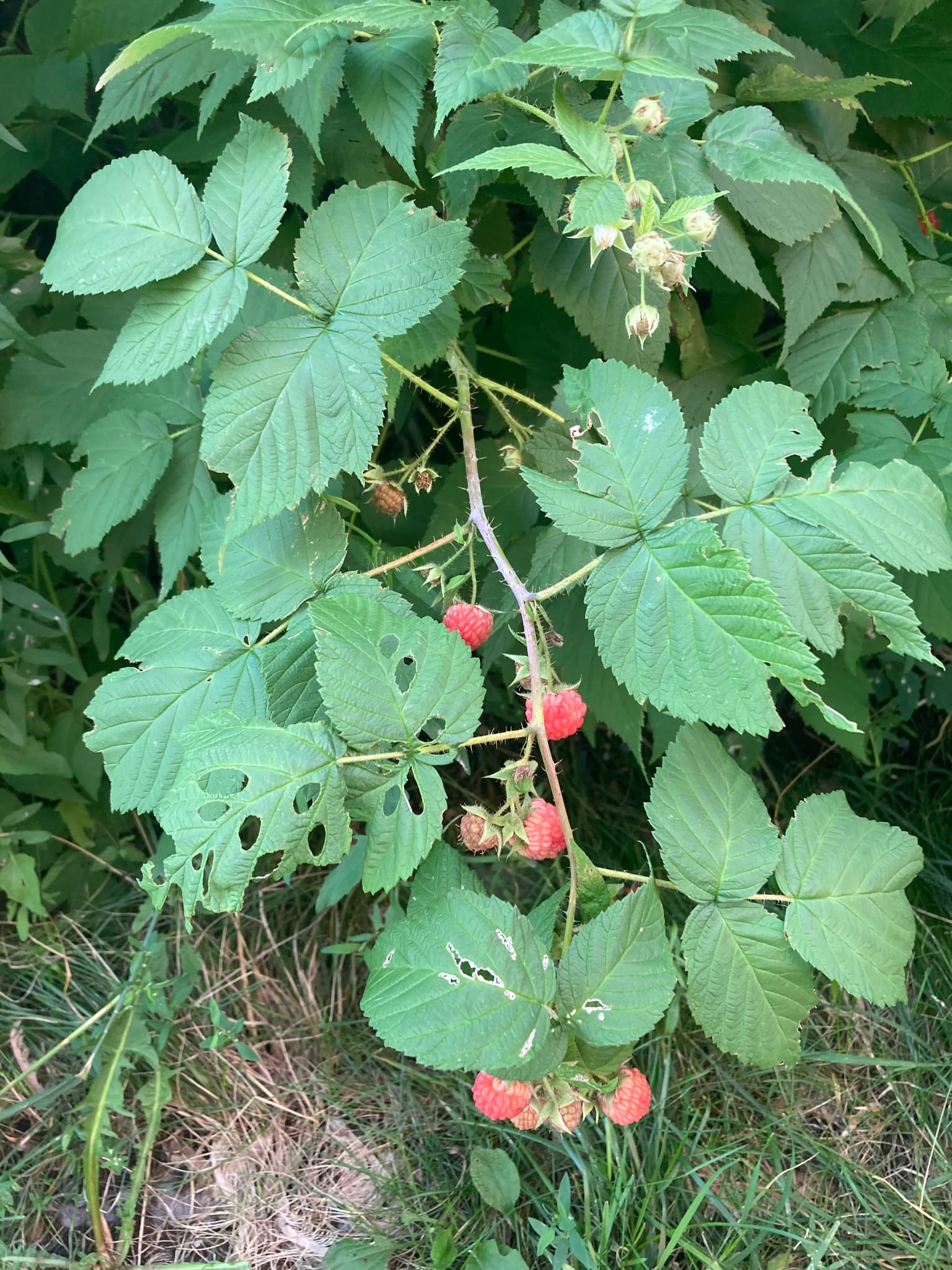
- Arching, thorny canes (usually round, with fine bristly prickles); grows in thickets.
- Leaves compound with 3–5 toothed leaflets, distinctly white-woolly underneath — the key tell.
- Ripe berry is red and pulls off the core hollow, like a little thimble (blackberry keeps its core; that's the difference).
Safety
- No toxic raspberry lookalikes — the whole bramble (Rubus) group is edible. Nothing dangerous mimics it here.
- Even the leaves are safe (traditional raspberry-leaf tea). The only caution is wilted Rubus leaves, which can be mildly upsetting — use fresh or fully dried, not in-between.
The easiest, safest wild berry there is — if it looks like a raspberry, it is one. Grazing on the spot is the whole point; anything past that is a bonus.
Harvest
- Pick when fully red and it detaches with the lightest tug, leaving a hollow thimble. If you have to pull, it’s not ready.
- Morning is best (firmer, cooler). Bring a shallow container — they crush easily.
- Watch the thorns and check for the odd insect inside; a quick float-rinse sorts them out.
Prep
- Best eaten straight off the cane. Beyond that: over yogurt/oatmeal, into pancakes, or a quick fridge jam.
- Freeze on a tray then bag, so they don’t clump — great through winter.
Notes
- Canes are biennial: this year’s fruiting canes die back, new ones take over — so a good patch produces year after year.
- (Verdun brambles logged Aug 4 — ripe now.)
Guides & links
Updated 2026-08-04