Purslane
Portulaca oleracea · also: pourpier, little hogweed, verdolaga
ripe nowGreens🗓 Summer
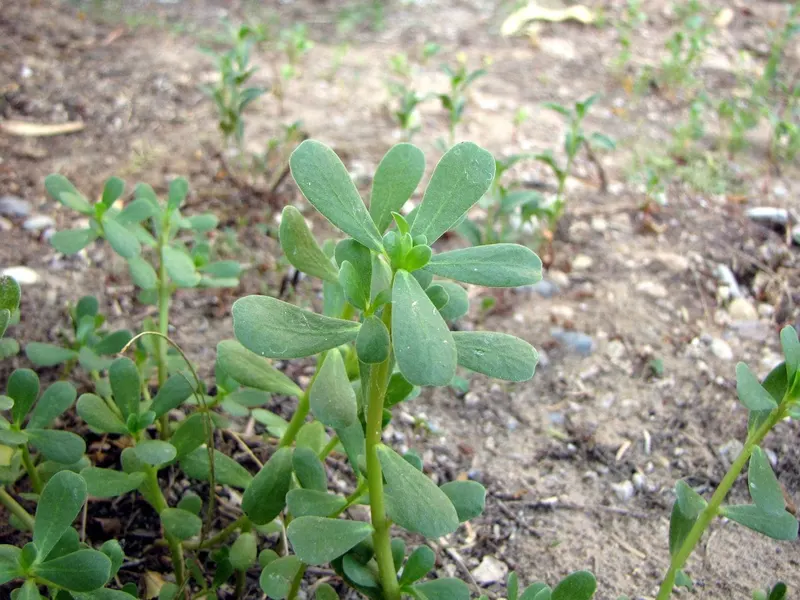
How to ID it
- Low, spreading mat in sidewalk cracks, gravel, and garden beds.
- Smooth, fat, succulent paddle-shaped leaves and thick reddish stems — the whole plant is juicy.
- Snap a stem: no milky sap (that helps rule out the toxic lookalike below).
Safety
- Succulent, hairless, and never oozes. Its one lookalike, prostrate spurge (Euphorbia), also mats on sidewalks but has thin, flat leaves and bleeds milky white sap when snapped — purslane's fat, juicy stems run clear. If it oozes white, it's not purslane.
- High in oxalates like spinach — fine in normal amounts; go easy if you're prone to kidney stones.
A crunchy, lemony succulent growing free in the cracks of the city, and one of the richest plant sources of omega-3 fatty acids. Most people weed it out without knowing it’s a delicacy (it’s sold in markets in Mexico and the Mediterranean).
Harvest
- Pinch off the tender stem tips and leaves; it regrows readily from what’s left.
- Harvest from clean ground — since it grows at foot level in sidewalks, avoid dog-traffic spots and rinse very well.
Prep
- Raw: whole sprigs in salads — crisp, juicy, lemon-tart. Great with tomato, cucumber, feta.
- Cooked: thickens soups and stews slightly (a mild okra-like effect); good sautéed, in stir-fries, or folded into eggs.
- Classic Mexican verdolagas — stewed with tomatillo and pork.
Notes
(Cleanest patches you trust.)
Guides & links
Updated 2026-07-27