Mulberry
Morus sp. · also: white mulberry, red mulberry
Fruit & berries🗓 Fruit ripe late June–July📍 3 on map (1 confirmed)
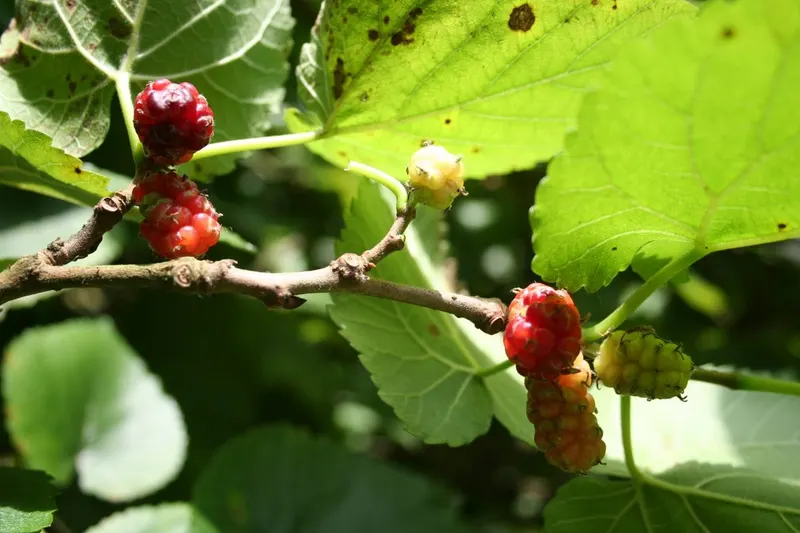
How to ID it
- Fruit looks like a slim blackberry; ripens white → red → deep purple-black.
- Look down for purple stains on the sidewalk — they give the tree away before you spot the fruit.
- Leaves are serrated and often mitten-lobed — unlobed, single-lobed and double-lobed leaves can all appear on the same tree.
- Milky sap in the leaf stem when snapped.
Safety
- A very safe fruit with no dangerous lookalikes. Eat only fully soft, dark berries — unripe white/green fruit and the milky sap can cause mild stomach upset.
The single best “hidden fruit” of the July city. Mulberries are planted as street and yard trees all over, and most people never notice them until the sidewalk underneath turns purple.
Harvest
- Ripe fruit is soft and drops at a touch. Lay a sheet or open umbrella under a branch and shake — ripe berries rain down, unripe ones stay put.
- Branches out of reach on a tall tree? Spread the sheet as wide as you can, then hook a high limb with a long pole, rake, or walking cane and jostle it — or shake the trunk of a smaller tree. Only dead-ripe berries let go, so you’re auto-sorting for ripeness; come back in a few days for the rest.
- Fruit ripens unevenly over 2–3 weeks, so the same tree keeps giving. Beat the birds in the morning.
- They stain everything — fingers, clothes, car roofs. Wear old clothes; park elsewhere.
Prep
- Eat fresh by the handful. They’re delicate and don’t keep — refrigerate and use within a day or two.
- Freeze on a tray then bag for smoothies / baking.
- Slightly low in acidity, so cook with a squeeze of lemon for jam or to brighten a pie. Great in muffins, over yogurt, or as a quick compote.
Notes
(Log the trees you find here — location, how loaded, when it ripened.)
Guides & links
Updated 2026-07-27