Lamb's Quarters
Chenopodium album · also: wild spinach, fat hen, goosefoot, chénopode blanc
ripe nowGreens🗓 Spring through fall📍 2 on map
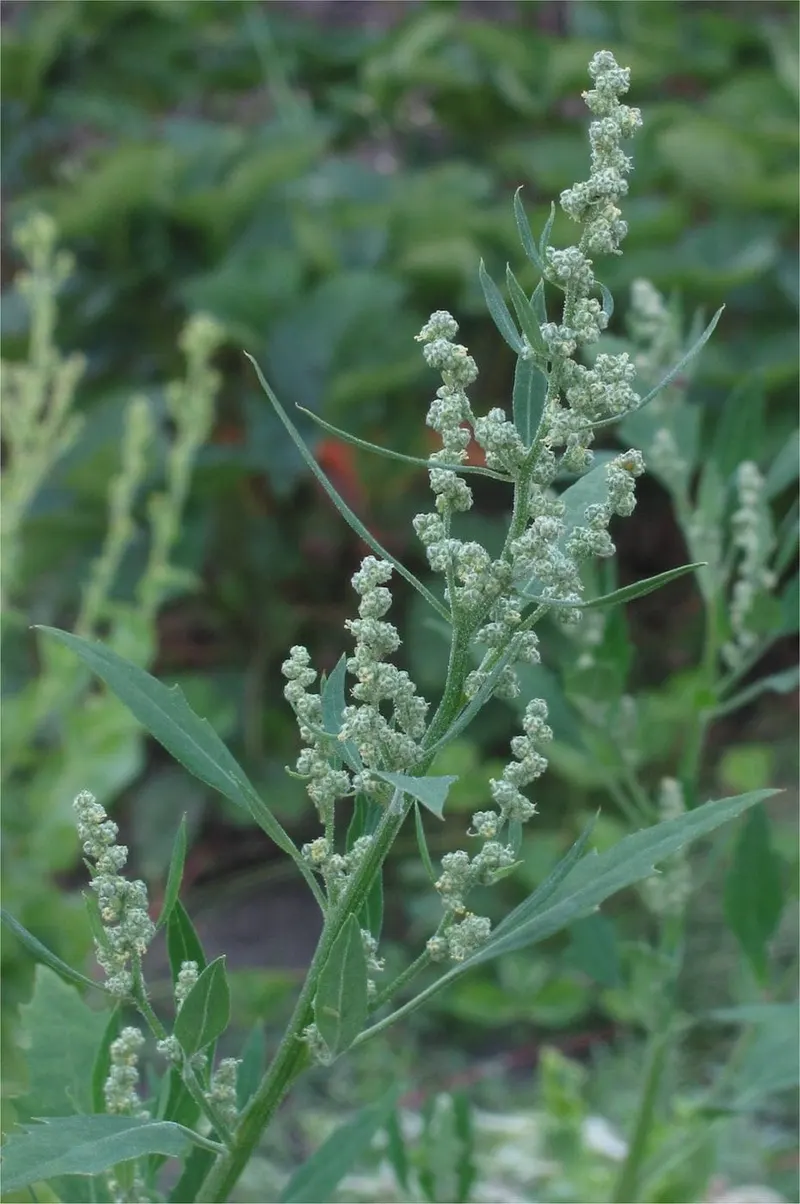
How to ID it
- Diamond / goosefoot-shaped leaves, often with a slightly toothed edge.
- The diagnostic: a white, powdery, water-repellent coating on the newest growth and leaf undersides — rub the growing tip and it feels mealy, and water beads on it.
- Stems often striped with pink/magenta; can grow knee- to head-high in disturbed soil.
Safety
- One of the safest wild greens — a close relative of quinoa and spinach, with no dangerous lookalike. Confirm the tell-tale white mealy coating on the newest leaves.
- Like spinach it holds oxalates and can take up nitrates: cook it rather than eating big raw quantities daily, and skip plants from sprayed or roadside soil.
Arguably the best wild green on the continent, growing as a “weed” in every garden bed, vacant lot, and sidewalk edge. If you learn one urban green, learn this one.
Harvest
- Pick the tender top 10–15 cm and young leaves; strip leaves from tougher lower stems.
- It regrows after cutting, so a good patch keeps producing all season.
- Later in the season it sets abundant seeds — edible, a wild relative of quinoa, worth collecting if you’re keen.
Prep
- Cook exactly like spinach: sauté with garlic and oil, wilt into soups, eggs, dal, or pasta. It holds texture better than spinach.
- Young leaves are fine raw in small amounts, but cooking is the default (reduces oxalates, tastes better).
Notes
(Best patches, and when they bolt to seed.)
Guides & links
Updated 2026-07-27