Crabapple
Malus sp. · also: crab apple, pommetier
ripe nowFruit & berries🗓 Fruit ripe mid-July through fall📍 5 on map
How to ID it
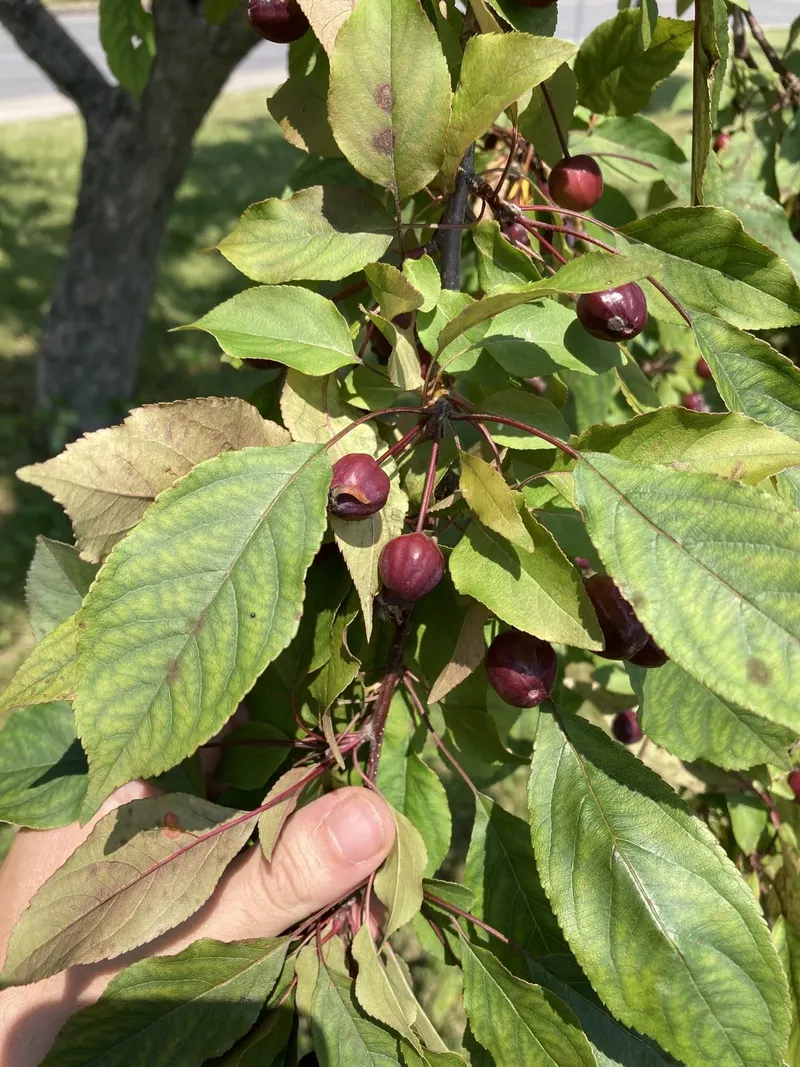
- Small apples, from pea- to golf-ball size, red / yellow / green; hang in clusters.
- Classic apple-blossom in spring (white-pink, 5 petals); toothed oval leaves.
- A 'crabapple' is just any apple under ~5 cm — all are edible, they range sour to sweet-tart.
Safety
- The flesh is edible and safe, with no dangerous lookalikes. As with every apple, only the seeds hold trace cyanogenic compounds, so don't eat crushed pips by the handful — the fruit itself is fine.
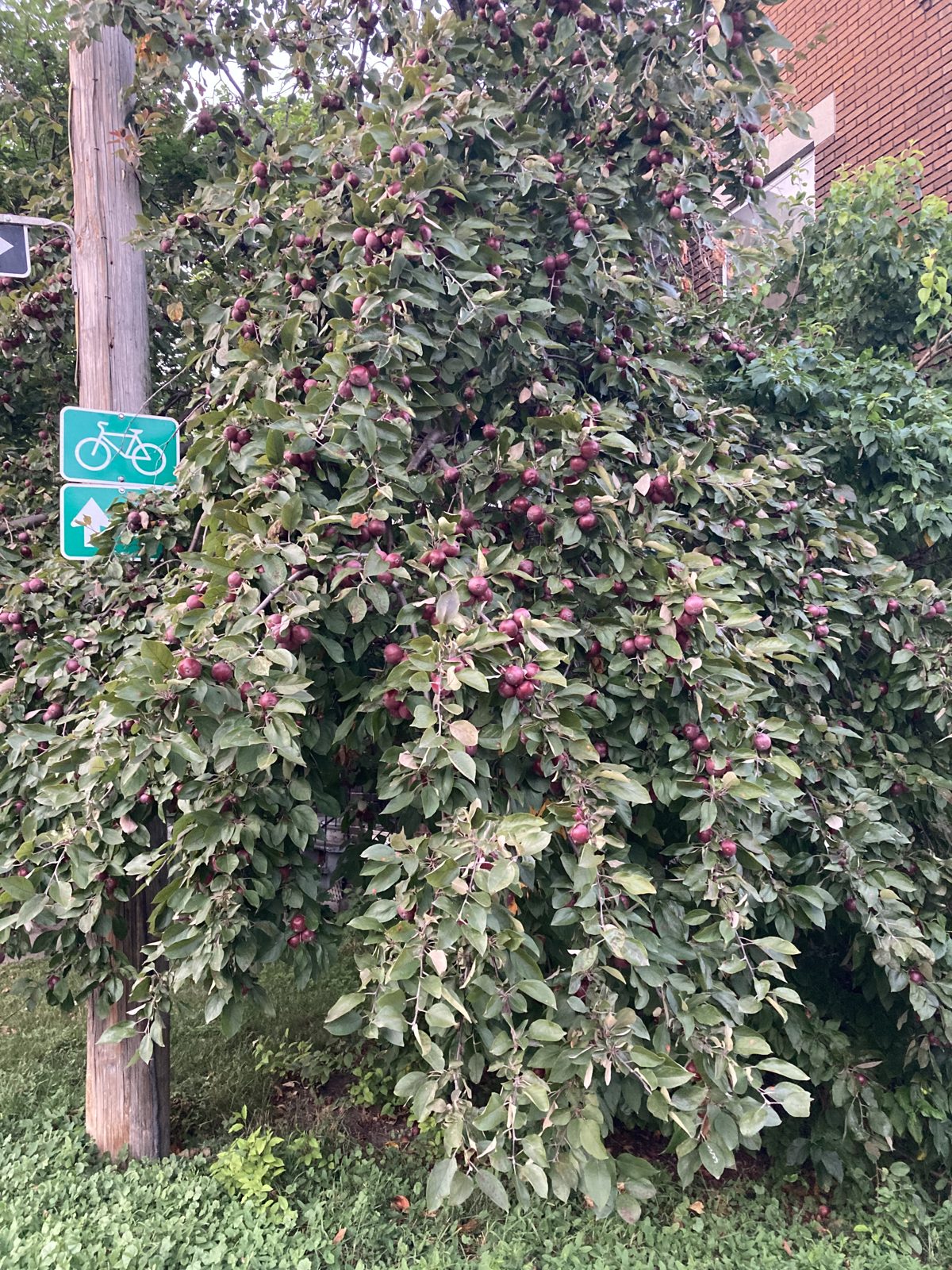
Ornamental crabapples line streets and parks all over Verdun — two are already on the map (Gaétan-Laberge and rue de Verdun & Beatty). Most are ignored and left to drop, which makes them a reliable, high-yield forage.
Harvest
- Pick when fully coloured and slightly soft; a good tree gives kilos. Taste one first — some cultivars are mouth-puckeringly tart (great cooked), others pleasant raw.
- They hold on the tree well into fall, sweetening after the first frost.
Prep
- Crabapple jelly is the classic — they’re loaded with natural pectin, so jelly sets with no added pectin. Simmer whole, strain, add sugar, set.
- Also great: apple butter, sauce, chutney, or muddled into cider/shrubs. Halve and core the bigger ones; tiny ones just simmer whole and strain.
Notes
(Note which trees are sweet-enough-raw vs. cook-only, and ripening dates.)
Guides & links
Updated 2026-07-27