Chokecherry
Prunus virginiana · also: chokecherry, cerisier de Virginie, cerise à grappes
Fruit & berries🗓 Fruit ripens late July–Sep, colouring dark red to near-black📍 41 on map (1 confirmed)
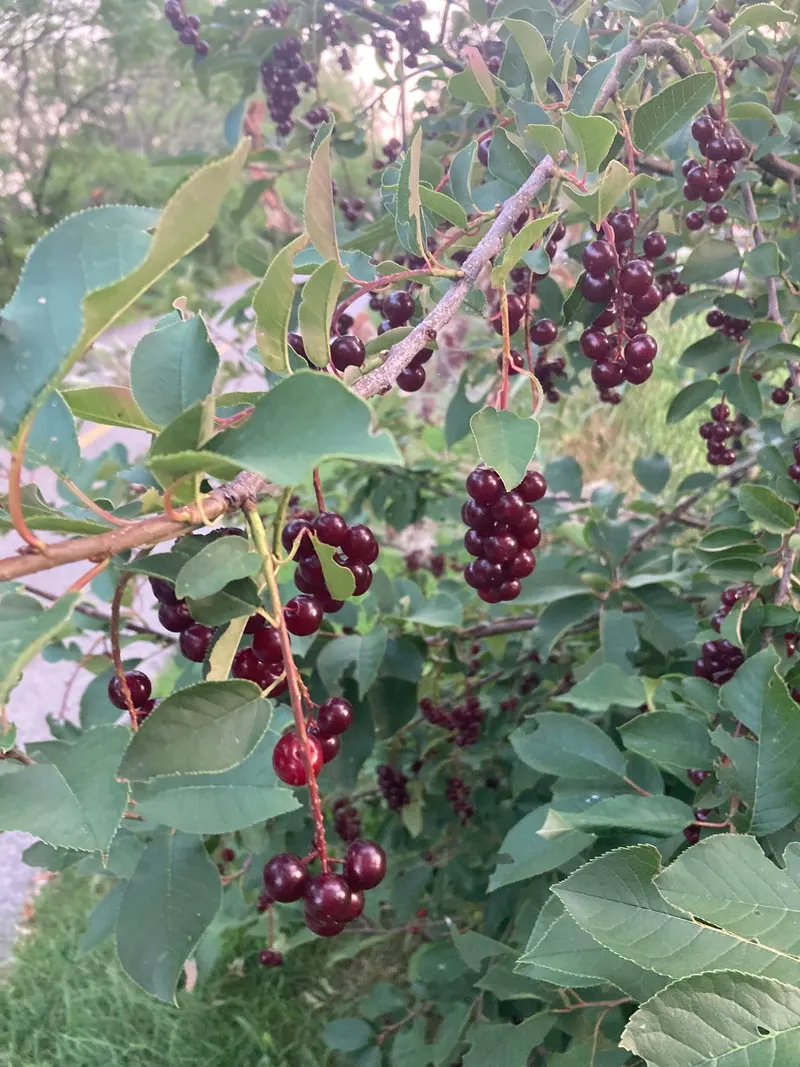
How to ID it
- Large shrub or small tree, often thicket-forming; smooth greyish bark.
- Simple, oval, finely serrated leaves with a pointed tip — alternate, glossy dark green above.
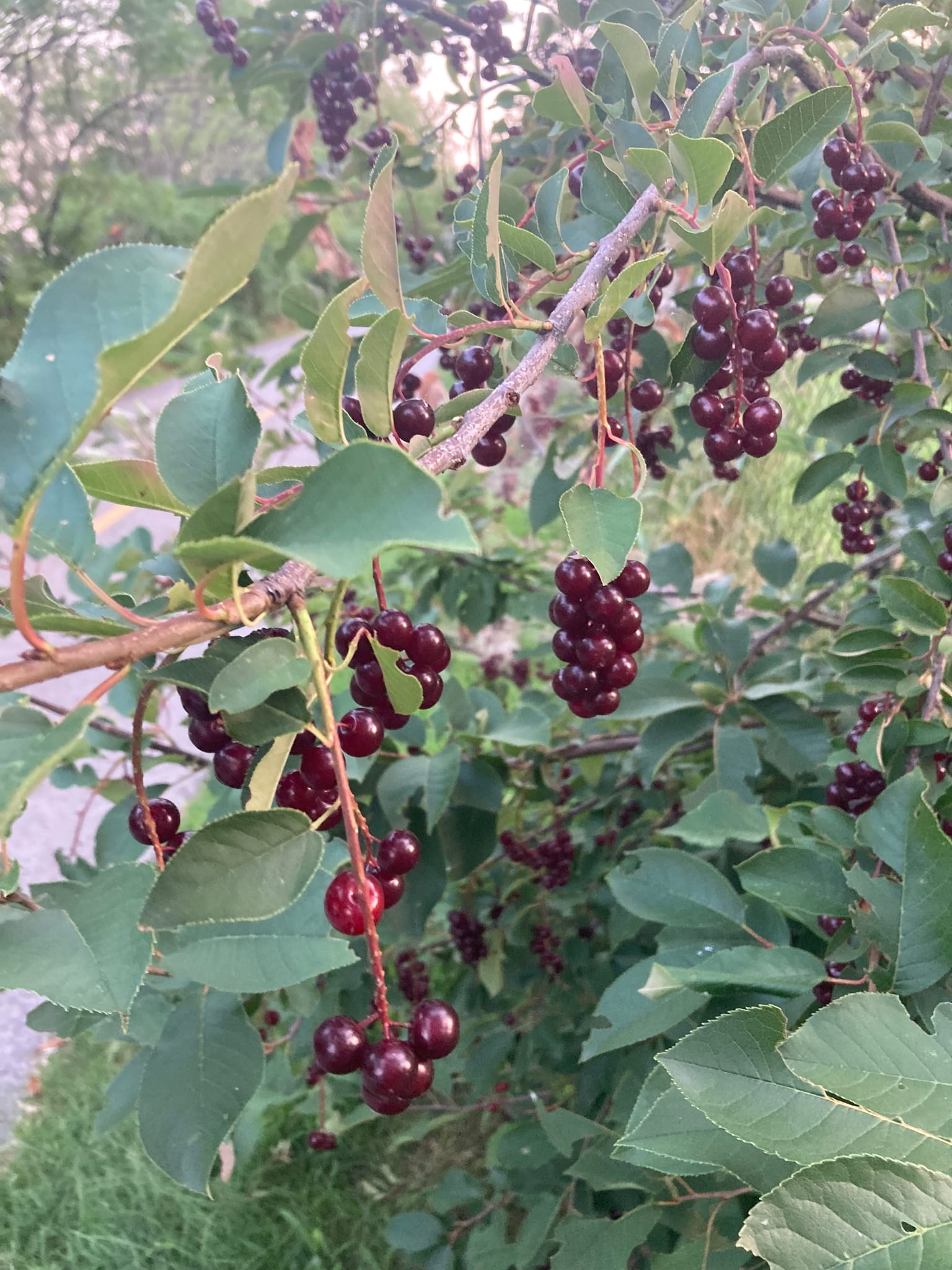
- Fruit hangs in elongated cylindrical clusters (racemes) — many small cherries on one drooping stalk, ripening red → dark purple-black.
- Each cherry has a single hard stone. Ripe fruit is sweet-then-astringent — puckers the mouth (the 'choke').
⚠ Safety & lookalikes
- Never eat the pits. The stones, leaves, and twigs contain cyanogenic compounds (amygdalin) — toxic if crushed and swallowed in quantity. The ripe flesh is fine.
- A cook-and-strain plant: raw fruit is harshly astringent, but cooking whole fruit for jelly or syrup (then straining out the stones) is traditional and safe. Never purée the fruit or crack the pits.
- The whole plant apart from the ripe flesh is cyanogenic — wilted leaves are the classic hazard to livestock, not something a forager eats, but worth knowing.
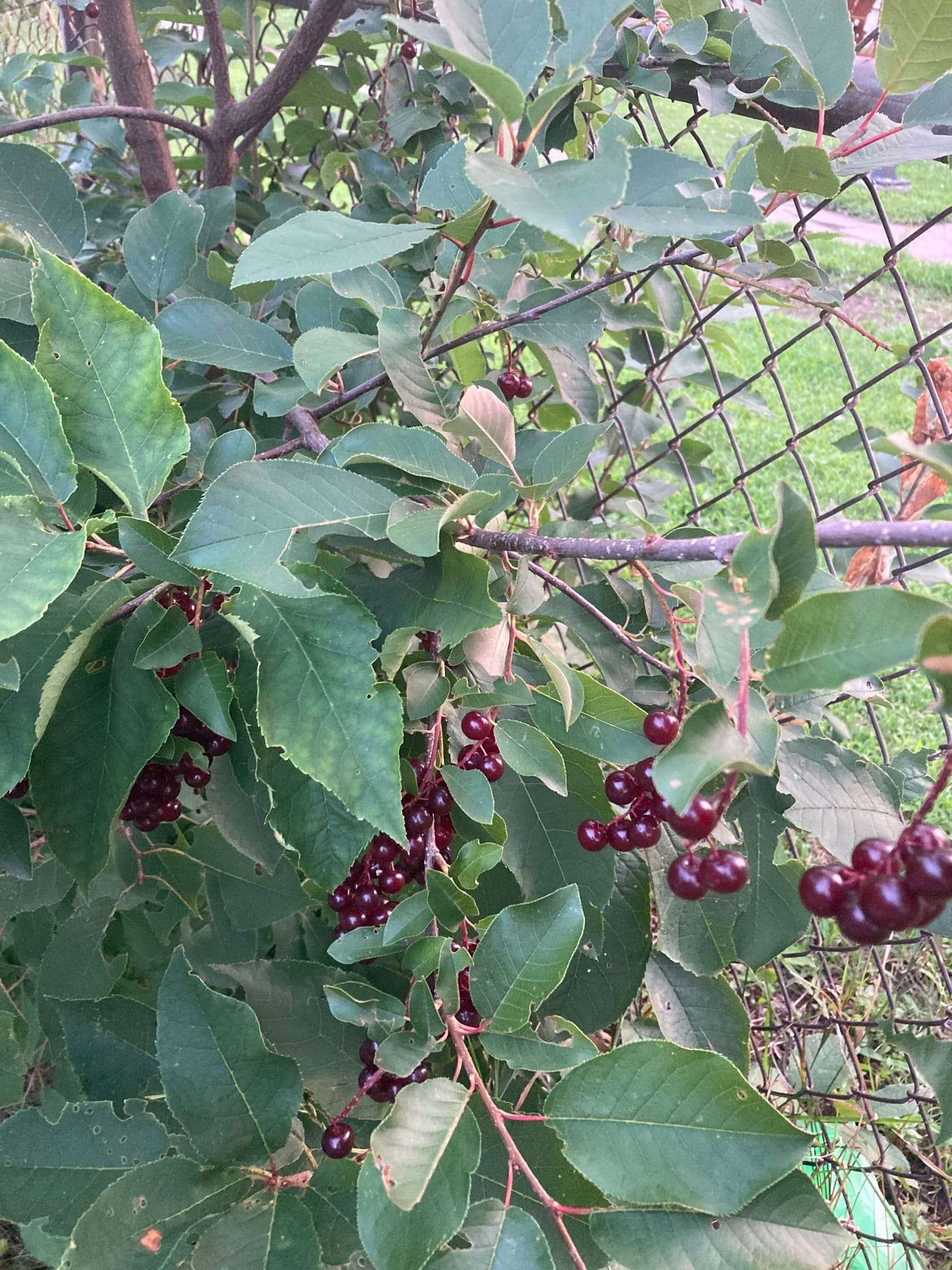
Chokecherry is one of the most common wild cherries across Montréal — thickets of it line paths, fences, and riverbanks. The giveaway is the fruit habit: instead of single cherries, the small dark fruits hang in long grape-like racemes. Named for the astringent “choke” when you bite a raw one — but cooked and strained, it makes a gorgeous deep-red jelly and syrup.
Harvest
- Pick whole clusters once the cherries are dark purple to nearly black and slightly soft — late July through September here.
- Strip the fruit off the stalks. It’s fiddly but fast once a cluster is fully ripe.
- Taste one for ripeness (spit the pit): ripe flesh is sweet up front, then puckery. Under-ripe red fruit is harshly astringent — leave it.
Prep
- Chokecherry jelly / syrup is the classic: simmer the whole fruit with a little water, then strain through a jelly bag so the stones and skins are left behind. Cook the strained juice with sugar (and pectin — chokecherry is only moderately high) for jelly, or reduce for syrup.
- Also good in wild-fruit blends, sauces for game, or fruit leather (strained purée only — never pass the pits through).
- Deep colour and a distinctive almond-tinged cherry flavour.
Safety
- Do not crush or eat the pits. Like other stone fruit in the Prunus family, the seeds are cyanogenic. Whole-fruit cooking and straining removes them — that’s the whole point of the method.
- Everything green (leaves, twigs) is also cyanogenic; only the ripe flesh is food.
Notes
- Distinguish from black cherry (Prunus serotina), which is a tall tree with similar racemes — both are prepared the same way, so an ID mix-up here is low-stakes as long as you cook and strain.
Updated 2026-08-04