Chicory
Cichorium intybus · also: wild succory, blue sailors, coffeeweed, chicorée sauvage
ripe nowGreens🗓 Greens spring & fall; flowers summer; roots dug in fall📍 4 on map (2 confirmed)
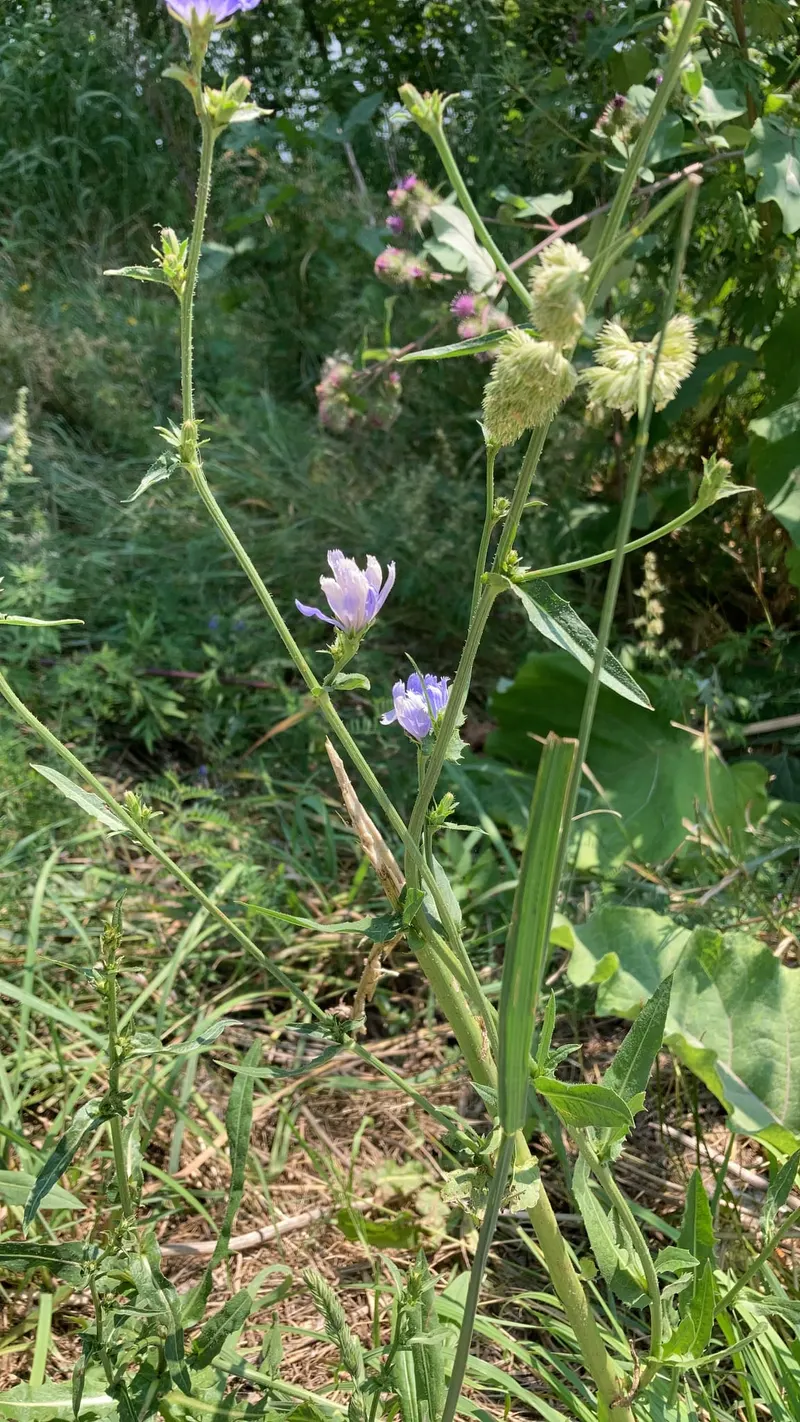
How to ID it
- Sky-blue, strap-shaped ray florets with 5 tiny square-toothed tips — that pale periwinkle blue is nearly unique among roadside plants. Flowers open in the morning and often close by afternoon.
- Flower heads sit sessile (stalkless), clasped tight against the stem along a stiff, wiry, nearly leafless flowering stalk.
- Rigid, angular, sparsely bristly stems; a basal rosette of dandelion-like lobed leaves, with small clasping leaves up the stem. Broken stems and roots ooze bitter white latex.
- Loves dry, sunny, disturbed ground — roadsides, rail edges, vacant lots.
Safety
- No dangerous lookalikes — the blue flowers plus milky latex are unmistakable. It's the same species as cultivated Belgian endive / radicchio.
- Every part is bitter; older leaves are intensely so. Skip plants growing in sprayed verges or exhaust-heavy roadsides.
A cheerful roadside weed that’s fully edible root-to-flower — and the classic wild coffee substitute. Its sky-blue flowers open through summer along sunny urban edges.
Harvest
- Leaves: best from the basal rosette in early spring and again in cool fall — young leaves are pleasantly bitter, older summer leaves punishingly so.
- Roots: dig in fall from established plants; a thick taproot, like a pale carrot.
- Flowers: pick fresh in the morning for a garnish.
Prep
- Greens: treat like dandelion or radicchio — braise, sauté, or blanch-and-refresh to tame the bitterness; toss young leaves into salad in small amounts.
- Roasted-root “coffee”: scrub, chop, roast the root until dark and brittle, grind, and brew like coffee — caffeine-free, deep and roasty. The traditional New Orleans coffee cut.
- Flowers: scatter over salads as a garnish.
Notes
(Best rosette patches for spring greens; which plants have the fattest roots for fall digging.)
Guides & links
Updated 2026-07-28