Black Currant
Ribes nigrum · also: blackcurrant, cassis, gadellier noir
Fruit & berries🗓 Ripe July–Aug📍 4 on map (2 confirmed)
How to ID it
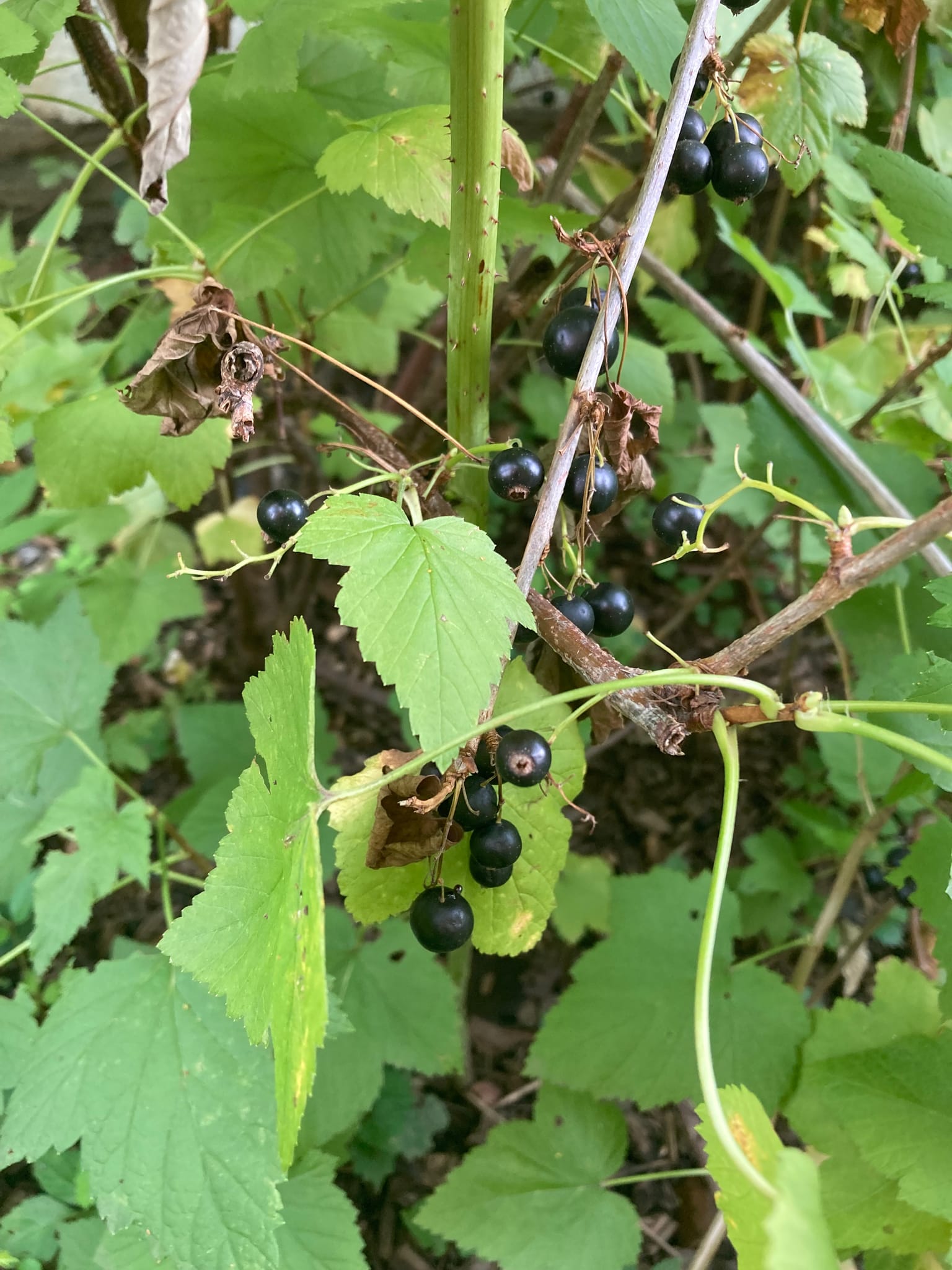
- Thornless shrub (currants have no prickles — that separates them from gooseberries).
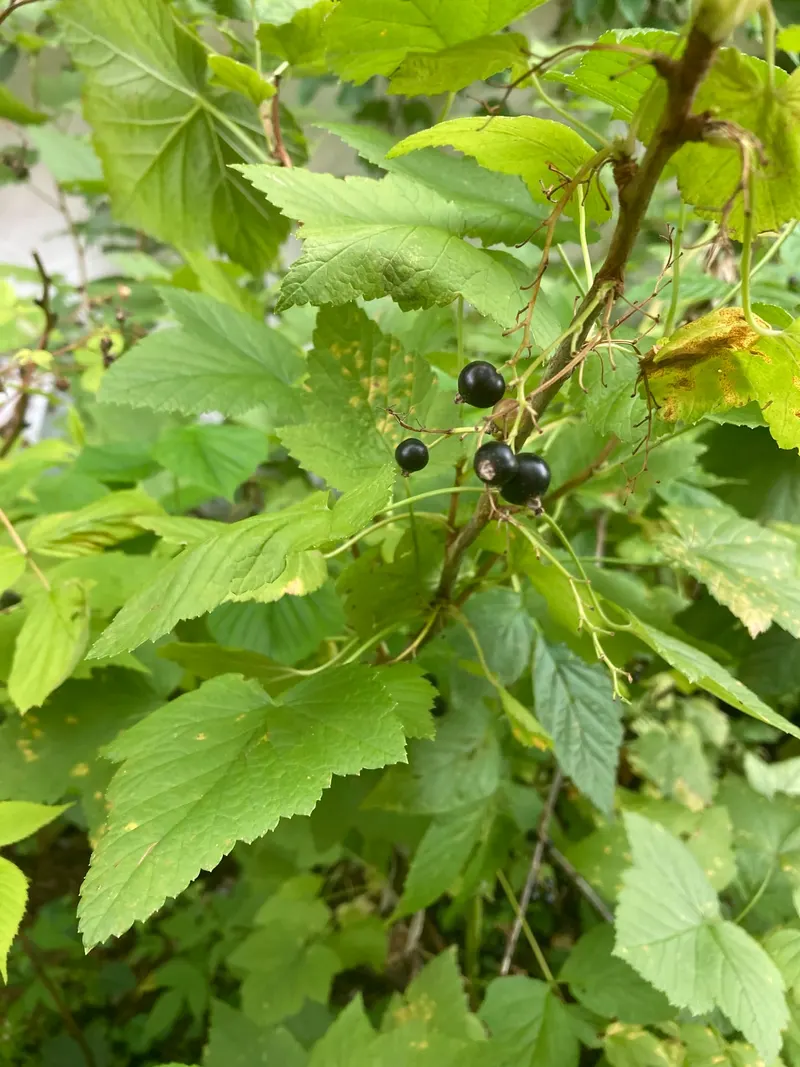
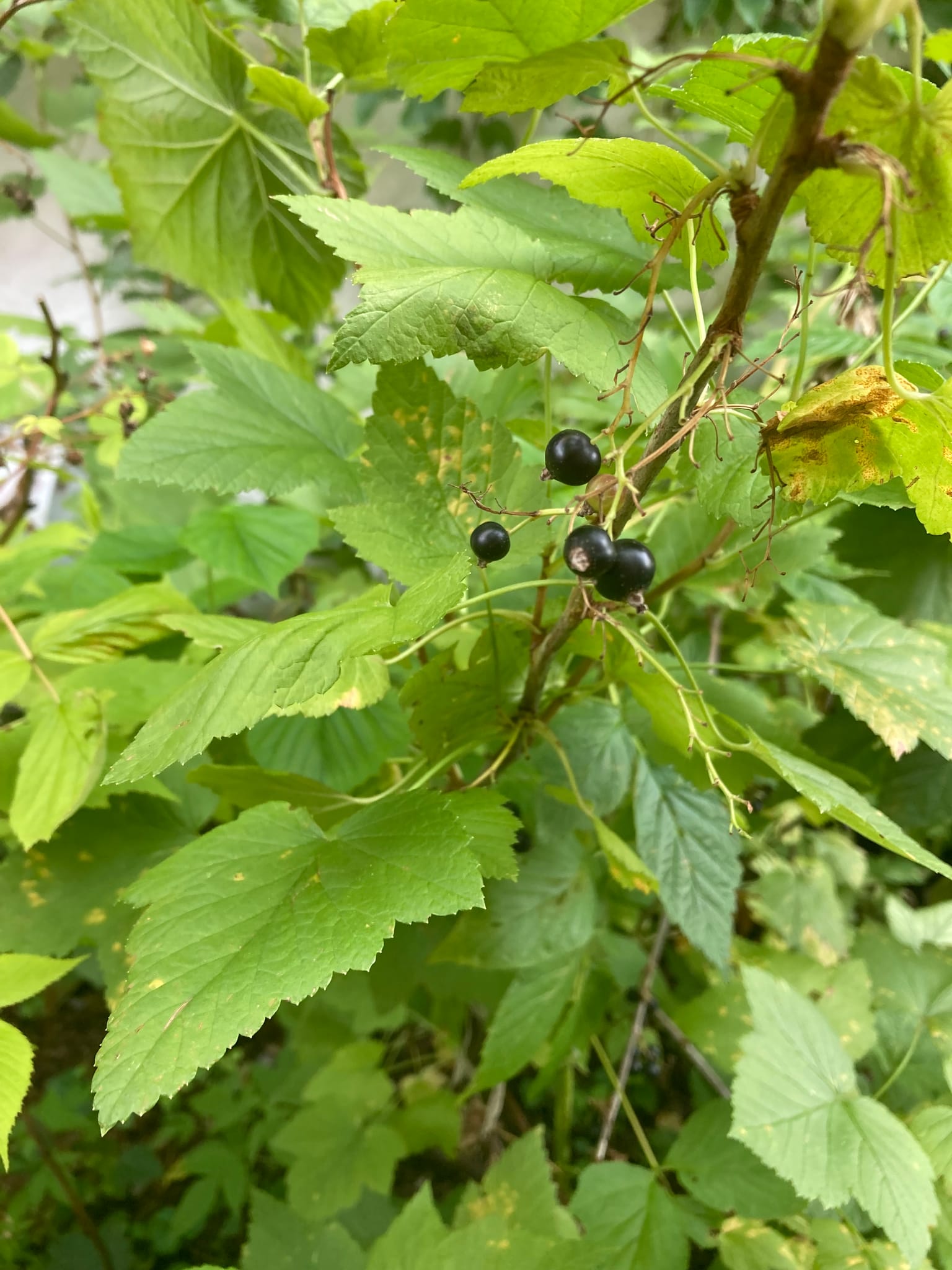
- Leaves palmate and maple-like, with 3–5 pointed toothed lobes; crush one — black currant leaves are strongly, resinously aromatic (the classic cassis smell).
- Berries smooth, round, glossy black, in short hanging clusters (small racemes), each keeping a little dried flower-tail at the tip.
Safety
- Edible and safe — currants (Ribes) have no toxic lookalikes in this group, and this is a well-known cultivated berry.
- Confirm the aromatic leaf + thornless stem + short strings of black berries. Garden-escape R. nigrum and the native black currant (R. americanum) are both equally edible, so the exact species doesn't matter for eating.
Cassis — the intensely aromatic black berry behind the liqueur and the jam. Escaped garden plants turn up in hedges and along fences; the crush-and-smell test makes it one of the easier berries to confirm.
Harvest
- Pick when berries are fully black, glossy and soft, mid-to-late summer. Ripe ones come off easily; strip whole strings and sort later.
- The flavour is much more assertive than a store raspberry — sharp, musky, “grown-up.” A little goes a long way.
Prep
- Raw: edible but tart and resinous — most people prefer them cooked or sweetened.
- Jam / cassis syrup: the classic. High in pectin, so they set well.
- Cordial / infusions: steep in sugar syrup (or spirit, for a homemade crème de cassis).
- Leaves: a few aromatic young leaves make a fragrant tea.
Notes
- Very high in vitamin C.
- (Verdun hedge logged Aug 4, next to the raspberry brambles.)
Guides & links
Updated 2026-08-04