Apple
Malus domestica · also: wild apple, feral apple, pommier
ripe nowFruit & berries🗓 Fruit ripe late summer into fall (windfalls can start dropping late July)📍 131 on map (2 confirmed)
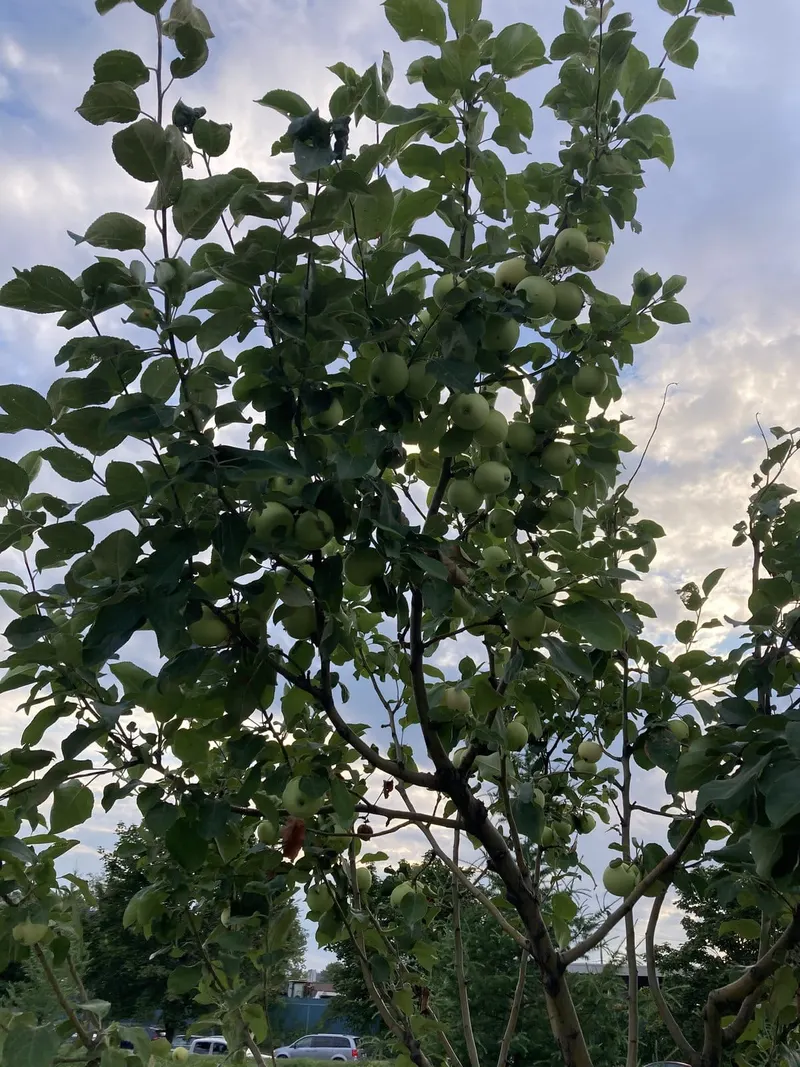
How to ID it
- Full-size apples (3–8 cm), green ripening to yellow/red; hang singly or in small clusters.
- Toothed oval leaves, greyish bark; white-pink 5-petal apple blossom in spring.
- Feral/planted apples along paths and parkland are often an unnamed seedling — flavour ranges from sweet to sharp; taste before you commit to a bagful.
Safety
- The flesh is edible and safe, with no dangerous lookalikes. As with every apple, only the seeds hold trace cyanogenic compounds, so don't eat crushed pips by the handful — the fruit itself is fine.
- Check windfalls for bruising and worm holes; bruised drops are best cooked.
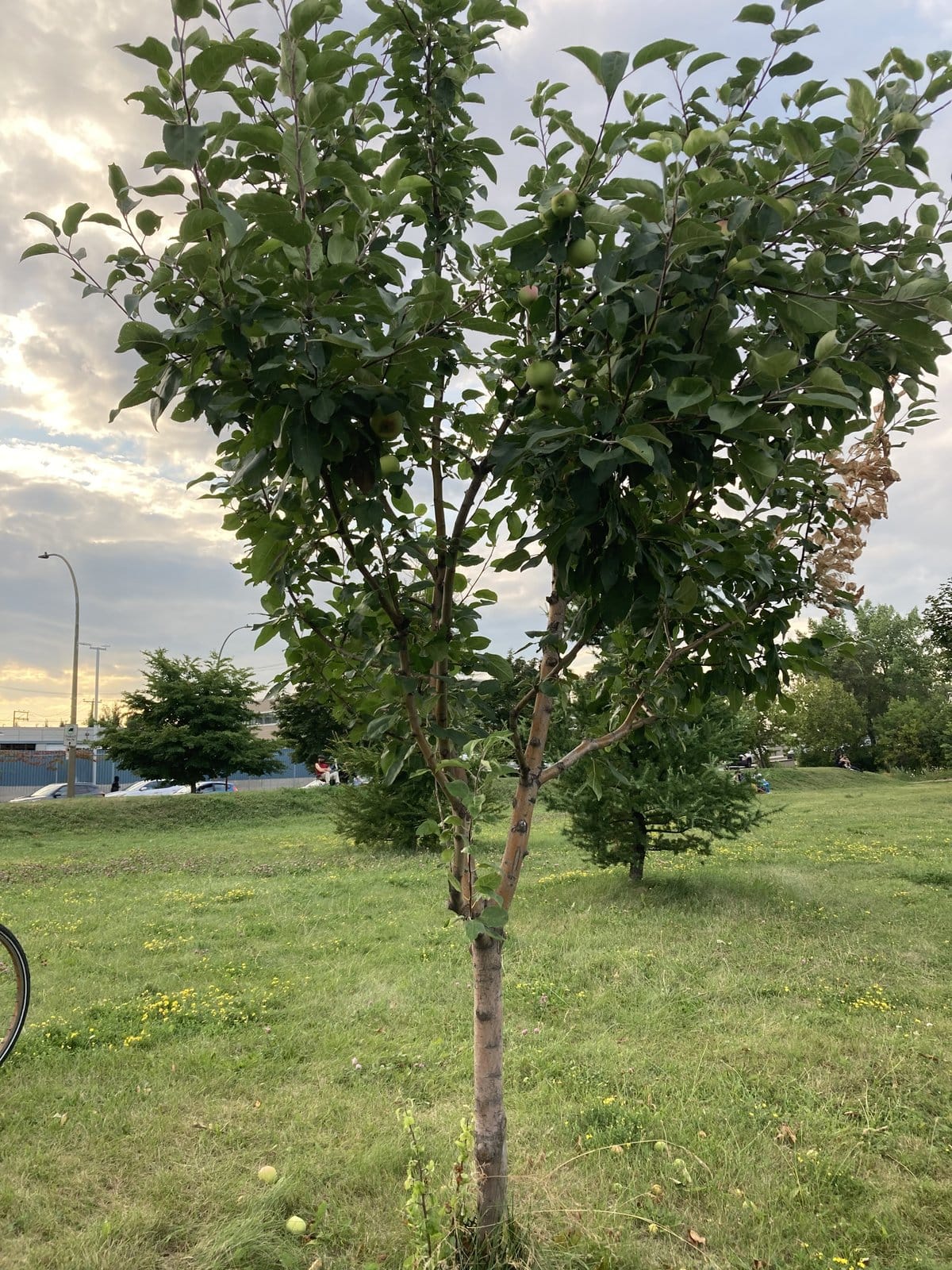
A row of young apple trees lines the bike path (on the map) — planted or feral, either way left unpicked. Full-size apples, not crabapples, so a handful is a real snack. Fruit ripens late summer into fall, with windfalls collecting in the grass below.
Harvest
- Pick when fully coloured and they part from the branch with an easy twist. Taste one first — seedling apples run anywhere from sweet to sharp-tart.
- Grab the good ones off the tree; use windfalls quickly (they bruise) and cook rather than eat those raw.
- They hold and sweeten on the tree into fall — apples that get a frost turn noticeably sweeter.
Prep
- Raw if the tree’s a sweet one — otherwise they shine cooked: sauce, apple butter, pie, or a tart-sweet crumble.
- Slightly under-ripe or sharp apples are high in pectin and perfect stretched into jelly or added to a low-pectin fruit to help it set.
- Halve and core; no need to peel for sauce (run it through a mill after cooking).
Notes
(Note which of the row’s trees are sweet-enough-raw vs. cook-only, and when they peak.)
Guides & links
Updated 2026-07-31